How I Teach Math to Kids with ADHD
your child’s ADHD math struggles are 100% my job now
My teaching system runs on 4 frameworks. One for learning new content, one for doing questions, one for tracking mistakes and one for homework. I built them around how an ADHD brain actually pays attention because I have ADHD too.
Learning New Content
- Main Idea:
- One Question Type. One Personalised Method
- Why:
- Too many methods overwhelm an ADHD brain. One consistent method and a focus on what comes out most in exams keeps your child’s attention on where the marks are.
My Technique:
- Every question type gets one consistent method, so your child is never juggling different approaches.
- Each lesson focuses on the concepts that come out most often in exams, followed by practice questions on them. I teach these through videos or hands-on learning on my website, where your child practises flashcards and MCQ questions in a gamified way.
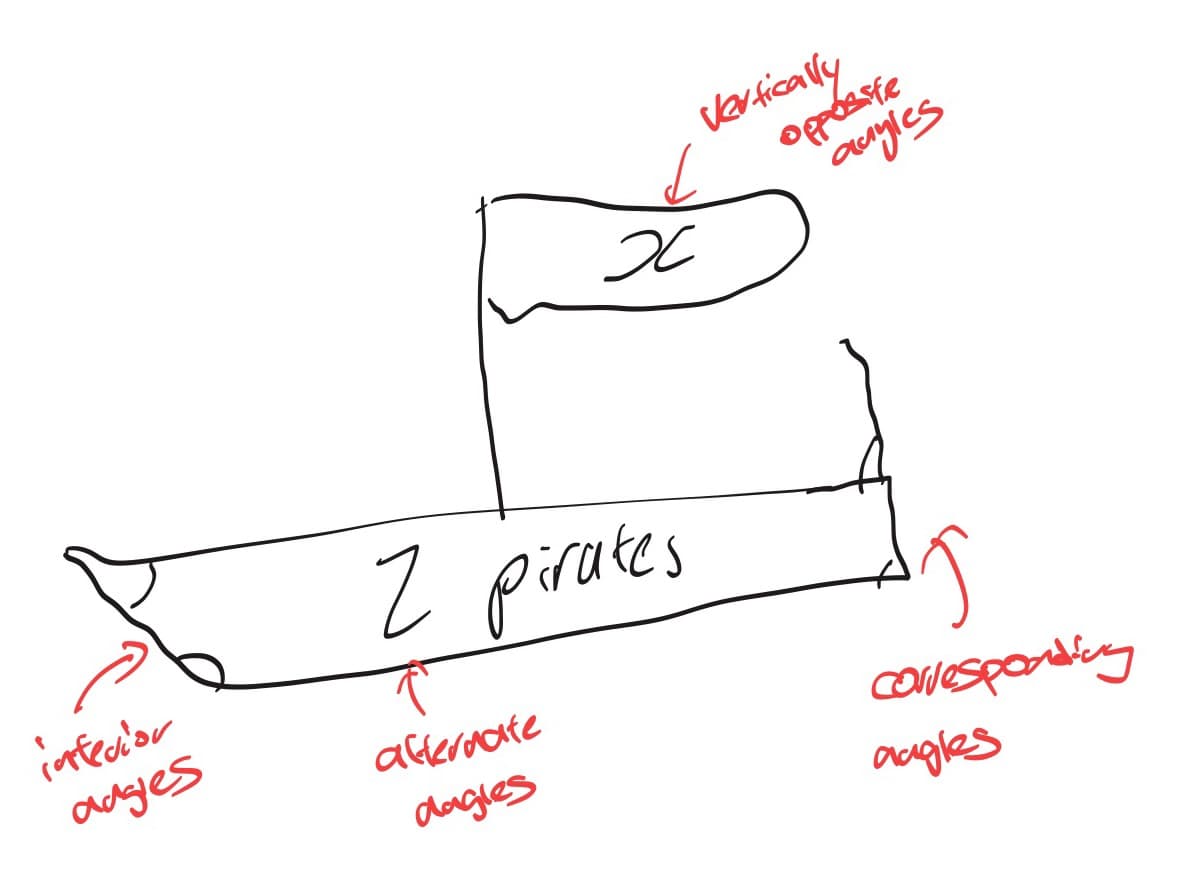
- When a concept is abstract or your child keeps forgetting it, they draw a picture of it.
- We review the pictures at the next lesson and your child explains it back to me in their own words.
Outcome:
- No more struggling to pass or staying stuck in the C range. Your child builds a solid baseline using these strategies.
- From there, their grades climb steadily towards a B, the grade where most of my ADHD students finally feel proud of their math.
An Example:
Take angles in Sec 1. There are four types that are easily mixed up: vertically opposite, alternate, interior and corresponding angles. Rather than memorise four definitions, your child draws a pirate ship with each angle taking its own part of the ship. We review the drawing at the next lesson and they explain it back to me in their own words.
Doing Questions
- Main Idea:
- Keep concepts in your child’s working memory.
- Why:
- Children with ADHD tend to have a smaller working memory, so careless mistakes happen more easily.
My Technique:
HVC
- H = Highlight the traps in each sentence of the question.
- V = Verbalise each step out loud.
- C = Check each step, including what was pressed into the calculator.
Outcome:
- Far fewer marks lost on questions your child already knew how to do.
- Your child walks into the exam hall with the same 3-step routine they have practised on every homework question.
Tracking Mistakes
- Main Idea:
- Every mistake gets recorded and revisited until your child has a counter attack for it.
- Why:
- The same mistakes tend to repeat, so fixing them is the fastest way to stop losing marks.
My Technique:
- We keep a Pokédex of common mistakes. Each entry records a common trap and its counter attack. The counter attack represents the method to solve it.
Outcome:
- Math starts to feel easy instead of like a boss match as your child understands the common traps in their Pokédex.
Homework System
- Main Idea:
- Small homework tasks matched to your child’s level.
- Why:
- Children with ADHD tend to struggle to work for a distant goal like exams. They work best when the task fits the ICNU Framework (Interest, Challenge, Novelty, Urgency). Finishing it for the rewards also gives them a quick, positive hit of dopamine.
My Technique:
- Your child is given micro personalised practices based on their proficiency, such as doing a specific question or attempting the first few steps. Micro personalised practices are pegged to different deadlines before the next session.
- When a micro personalised practice is done, they send me a photo of their work and I use it to prepare for the next lesson. That is what sets me apart from other tutors. Every lesson caters directly to your child’s growing needs.
- I also work with you to create a reward system that gamifies their learning. Doing micro personalised practices rewards them while skipping one costs them rewards.
Outcome:
- Your child starts finishing micro personalised practices by their deadlines, leading to greater retention of concepts throughout the week.
- No more “I’m just bad at math.”
See it work on your child in their First Lesson
If the first lesson doesn’t click, no pressure to continue.
Every child learns at their own pace, and I adjust to yours.